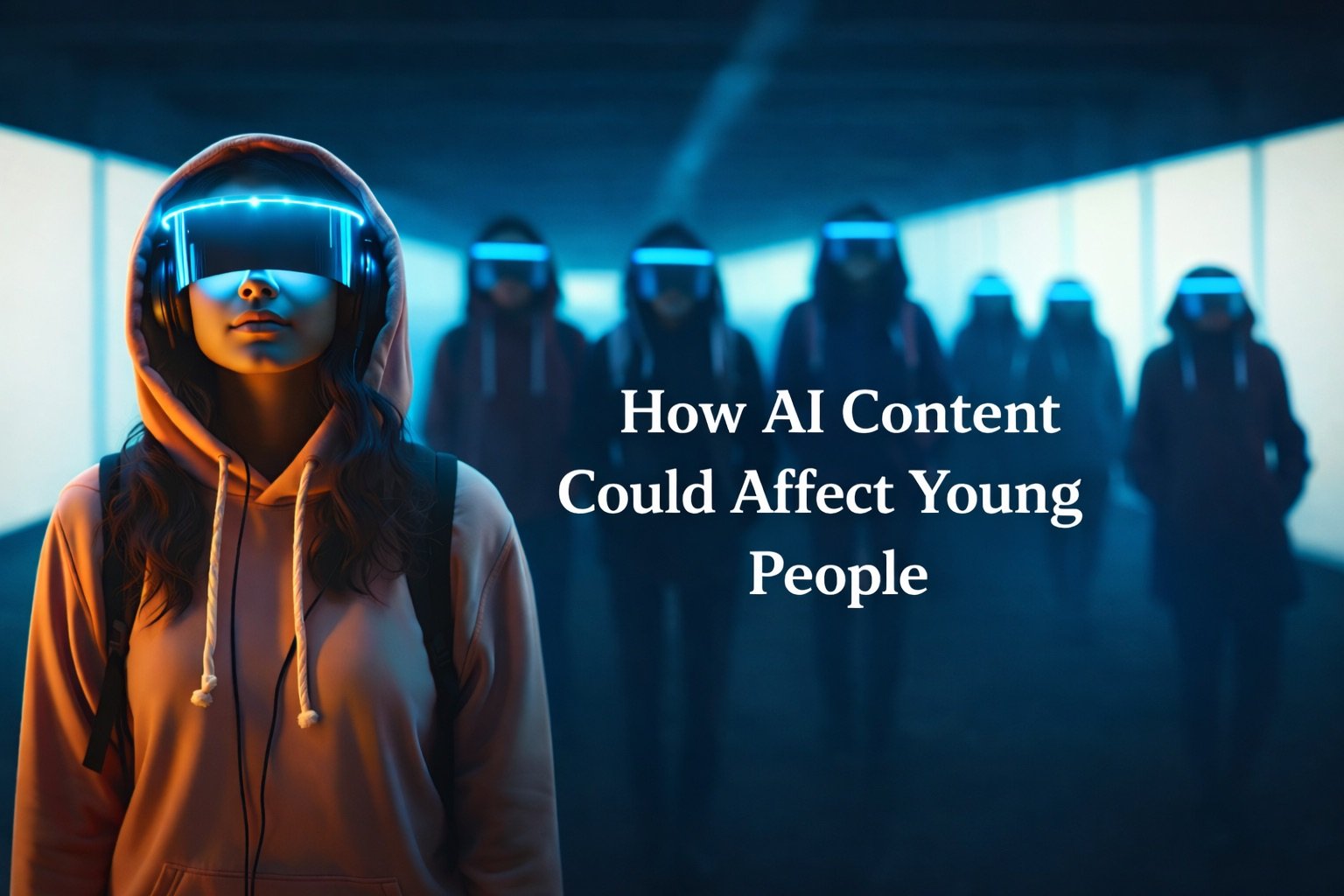
How AI Content Could Affect Young People
Vocabulary

Influence (Verb)
To affect the way someone thinks or behaves.
Misinformation (Noun)
False or incorrect information shared as if it were true.
Credibility (Noun)
The quality of being believable or trustworthy.
Algorithm (Noun)
A set of rules used by computers to recommend content online.
Critical thinking (Noun)
The ability to carefully analyze information before believing it.
Article
Young people today are growing up in a digital world. Many teenagers spend several hours each day using social media, watching videos, and interacting with online content. Because of this, the information they see online can have a strong influence on how they understand the world.
In recent years, artificial intelligence has begun to transform the internet. AI tools can now create realistic photos, videos, and written content in seconds. These tools are becoming easier to use, and millions of people are experimenting with them.
While AI technology offers many exciting possibilities, some experts worry about how it might affect younger generations.
One major concern is misinformation. AI systems can generate realistic fake news stories, fake interviews, and even fake historical photos. If these pieces of content spread through social media, they can be difficult to recognize as false. Young users may struggle to judge the credibility of what they see online, especially if the content appears professional or convincing.
Another challenge involves algorithms. Social media platforms use algorithms to recommend content based on what users watch, like, and share. If AI-generated videos or images become popular, these systems may promote them even more widely. This can create a situation where artificial or misleading content spreads faster than reliable information.
Some researchers also worry about the psychological effects of AI-generated media. For example, AI tools can create idealized or unrealistic images of people, which may affect how young users see themselves and others. However, educators believe that education can help address many of these challenges.
Schools around the world are beginning to teach digital literacy and critical thinking skills. Students are learning how to verify sources, question suspicious information, and understand how algorithms shape what they see online.
These skills may become increasingly important as AI technology continues to evolve. Just as previous generations learned to understand television and advertising, young people today must learn to navigate a world where not everything online is created by humans.
Understanding how AI works and how it can be misused may become an essential part of education in the digital age.
Discussion Questions
- Do you think young people are more or less prepared for AI-generated content than adults?
- How can schools help students develop critical thinking skills?
- Should social media companies limit AI-generated content?
- What dangers could misinformation create for young users?
- How might AI change the way young people learn in the future?