Are Audiobooks “Real” Reading?
Vocabulary
Comprehension – the ability to understand and process what you read or hear.
Example – Her comprehension of the novel was strong, even though she listened rather than read.
Inference – a conclusion reached based on evidence and reasoning, rather than something stated directly.
Example – Making an inference about a character’s motive requires connecting several small details.
Stigma – a negative judgment attached to something, often unfairly.
Example – Audiobooks have long carried a stigma as the “lazy” way to consume a book.
Modality – a particular way or format in which something is done or experienced.
Example – Researchers compared reading and listening as two different modalities of consuming text.
Literal – based on the exact, most obvious meaning of words, without interpretation.
Example – Literal comprehension means remembering facts the book directly stated, not reading between the lines.
Article
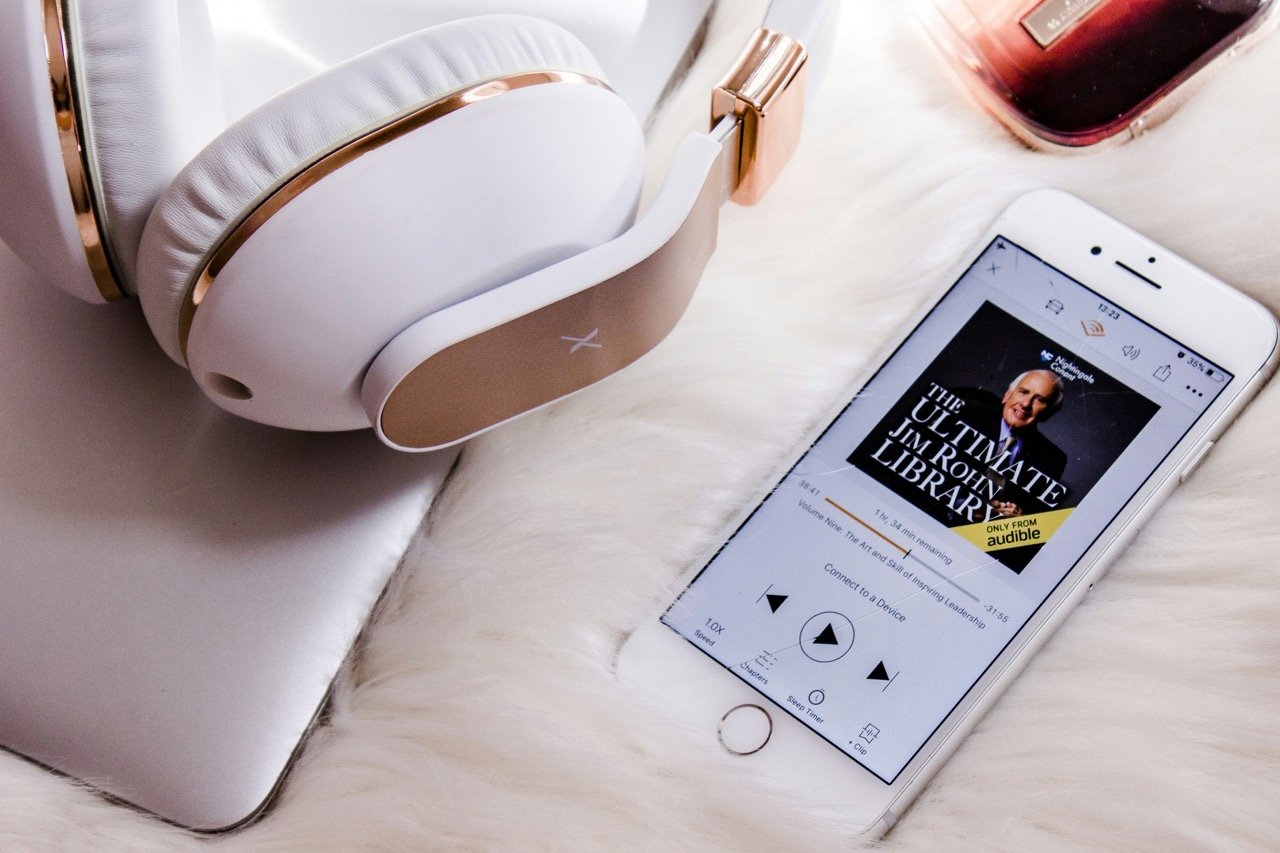
Ask a room full of readers whether audiobooks “count” as reading, and you will likely start an argument. Some people insist that listening is a completely different, lesser experience. Others point out that they finish more books this way than they ever did with print. In 2026, with audiobook sales breaking records and new research finally digging into what actually happens in the brain during listening, the debate has become more interesting, and more complicated, than a simple yes or no.
The Brain Doesn’t Fully Care How the Words Arrive
A widely cited study out of the University of California found no significant difference in overall comprehension between people who read a passage and people who listened to the exact same material. Once sound enters the brain through the auditory cortex, it feeds into the same language comprehension networks used for reading. Mental imagery, story construction, and emotional processing all appear to happen through largely the same downstream pathways, regardless of whether the words entered through your eyes or your ears.
That finding alone would seem to settle the debate. But more recent research complicates the picture considerably.
Where the Science Gets More Complicated
A 2026 study looked specifically at what happens when listeners cannot control their own pace, the normal condition for audiobook listening, and compared it to self-paced silent reading. The results showed that literal comprehension, remembering facts the text directly stated, was roughly equal between the two groups. But listeners scored lower on questions requiring inference, meaning they struggled more to draw conclusions the text implied rather than stated outright. Researchers suggest that listening’s fixed, imposed rhythm makes it harder to pause, reread a sentence, or apply deeper comprehension strategies the way a reader naturally can.
Material type also matters enormously. Dense, hierarchical material, like a textbook full of technical facts, shows a clear advantage for silent reading. A flowing, forward-moving novel, on the other hand, tends to show little meaningful difference between the two formats. Perhaps most surprisingly, one 2026 study found that reading and listening to the exact same text at the exact same time actually produced worse comprehension than reading silently alone, suggesting that combining both modalities can overload rather than reinforce understanding.
The Boom Nobody Fully Predicted
Whatever the science says, audiobooks are not slowing down. Industry data shows audiobook revenue and title releases climbing significantly through 2026, continuing years of steady growth. One industry survey found that 67 percent of audiobook listeners say they finish more books in a year using audio than they would relying on text alone. For many people, especially those juggling commutes, exercise, or chores, audiobooks are not replacing reading time. They are creating reading time that would not otherwise exist at all.
Performance, Not Just Narration
Audiobook defenders often make a further point: a skilled narrator does not simply read a book aloud, they perform it, shaping tone, pacing, and character voices in ways a silent reader has to construct entirely on their own. Under that framing, an audiobook isn’t a lesser version of the “real” book. It is its own distinct artistic experience, closer to watching a play adapted from a novel than to reading photocopied pages aloud.
So, Does It Count?
The honest answer researchers keep landing on is: it depends on what you’re trying to get out of the book. For following a story, building vocabulary, or simply falling in love with reading in the first place, audiobooks appear to hold up remarkably well against print. For dense technical material where inference and careful rereading matter most, silent reading likely still has a real edge. Rather than one modality winning outright, the science increasingly suggests that reading and listening are simply different tools, each suited to different kinds of books and different kinds of readers.
Discussion
Do you consider audiobooks “real” reading, or something different? Why?
Have you ever finished a book by audio that you probably would not have finished in print?
Do you think a great narrator can improve a story compared to reading it silently?
Why do you think audiobooks have carried a stigma as the “lazy” option?
Would you trust your comprehension more with a textbook you read, or one you listened to?
Do you ever read and listen to the same book at the same time? Does it help or distract you?
What kind of book do you think works best as an audiobook, and what kind works best in print?
Sources
Psychology Today: Is Listening to an Audiobook as Good as Reading?
Phys.org: Does Listening to Audiobooks Improve Learning?
Voices.com: Audiobook Listening Trends Report