Are Companies Giving Up on Climate Goals to Focus on AI?
Vocabulary
Emissions – Gases released into the air that can cause climate change
Example – Factories and cars produce emissions that can harm the environment.
Infrastructure – The basic systems and structures needed for operations
Example – Cities need strong infrastructure like roads, power systems, and internet connections.
Renewable energy – Energy from sources like wind or sunlight that naturally replace themselves
Example – Many countries are investing in renewable energy to reduce pollution.
Extraction – Removing natural resources from the Earth
Example – Oil extraction can damage ecosystems if it is not managed carefully.
Ecosystem – A community of living things and their environment
Example – Forests are important ecosystems that support many plants and animals.
Sustainability – Using resources in a way that protects the future
Example – Recycling and clean energy help support sustainability.
Guardrails – Rules or limits designed to keep something safe and under control
Example – Experts say AI companies need guardrails to prevent environmental damage.
Article
Artificial intelligence is growing faster than almost any technology in history. Companies around the world are investing billions of dollars into AI systems, data centers, and machine learning tools. But as AI expands, many experts are asking an important question: Are companies sacrificing climate goals in order to win the AI race?
At the same time, researchers also believe AI could become one of the most powerful tools in the fight against climate change. The future of AI may depend on how governments, businesses, and society decide to use it.
AI’s Growing Environmental Problem
Modern AI systems require huge amounts of electricity. Large data centers run day and night to power chatbots, image generators, search engines, and cloud computing services. These centers also need enormous cooling systems that use large amounts of water and energy.
Some technology companies have already admitted that their carbon emissions are rising because of AI expansion. Microsoft, for example, has struggled to meet its climate promises as it rapidly builds infrastructure to support artificial intelligence.
Many climate activists worry that companies are prioritizing profits and AI competition over environmental responsibility. Fossil fuel use may even increase in some regions as energy demand rises.
According to an article from Atmos Earth, data centers are “spewing pollution and draining power grids” while communities near these facilities often deal with environmental consequences.
Why Companies Are Still Chasing AI
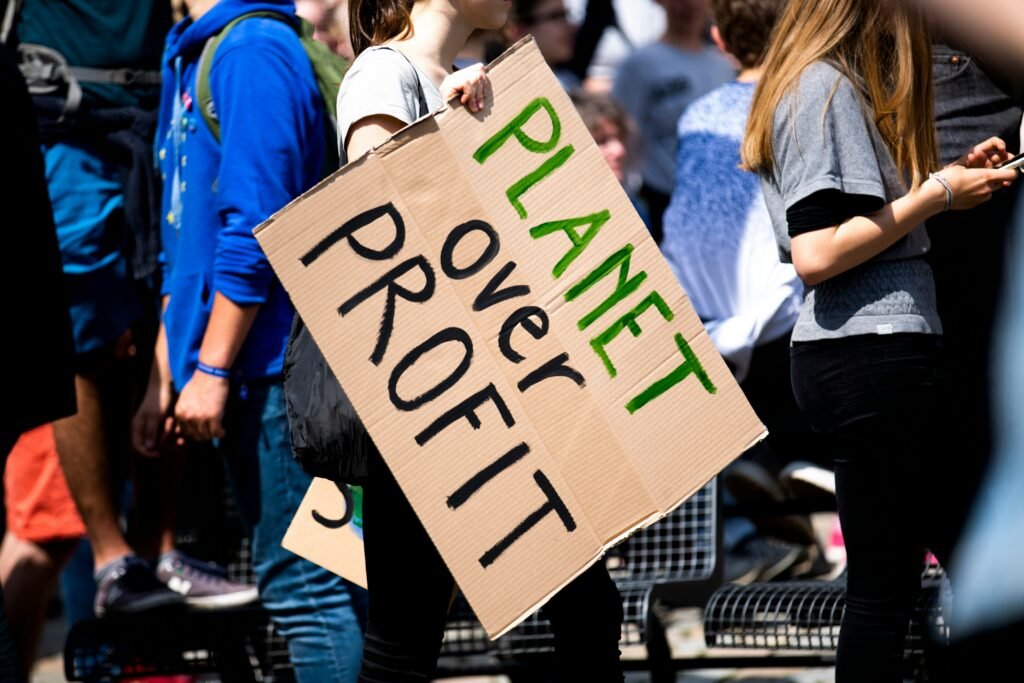
Despite environmental concerns, companies see AI as the future of business. AI tools can improve productivity, automate tasks, create new products, and generate massive profits. Tech companies are competing aggressively because they believe the winners of the AI race could dominate the global economy for decades. As a result, climate goals that once seemed urgent may now be taking a back seat.
Governments are also encouraging AI development because of its importance for national security, healthcare, education, and economic growth.
How AI Could Actually Help the Climate
Even though AI creates environmental problems, scientists say it could also become a major part of the solution. Researchers believe AI can help reduce greenhouse gas emissions in transportation, energy systems, agriculture, and manufacturing. One study mentioned in Atmos Earth estimated that AI could cut global emissions by billions of metric tons each year by 2035 if used correctly.
AI is already being used in several important ways:
Predicting Extreme Weather
AI systems can analyze huge amounts of weather data much faster than humans. This helps scientists predict hurricanes, floods, droughts, and heat waves earlier and more accurately.
Earlier warnings can save lives and reduce damage.
Improving Renewable Energy
Solar and wind energy depend heavily on weather conditions. AI can help energy companies predict electricity demand and manage renewable energy more efficiently.
This could make green energy systems more reliable and reduce dependence on fossil fuels.
Reducing Food Waste
Some supermarkets and restaurants now use AI-powered systems to track food waste and improve inventory management. Less wasted food means lower emissions from farming, transportation, and garbage disposal.
Protecting Forests and Oceans
Scientists are using satellites and AI models to monitor forests, track carbon storage, and study environmental damage in real time.
AI could also help researchers understand plastic pollution in rivers and oceans, leading to better cleanup strategies.
The Real Issue: How AI Is Used
Experts say AI itself is not automatically good or bad for the climate. The real issue is how governments and companies choose to use it.
If AI is controlled mainly by private corporations focused on profits, it could increase pollution and resource extraction. Fossil fuel companies are already using AI to improve oil and gas exploration.
However, if AI development is guided by environmental policies and public interests, it could accelerate the transition to cleaner energy and smarter environmental management.
Researchers argue that strong regulations and “guardrails” are needed to ensure AI supports climate goals rather than harming them.
A Future Still Being Decided
The relationship between AI and climate change is complicated. Right now, AI is increasing energy demand and making it harder for some companies to meet environmental promises. But the same technology could also help humanity build cleaner energy systems, protect ecosystems, and reduce emissions.
The future will depend on the choices being made today.
AI may become another tool for profit and pollution, or it could become one of the most important technologies in the fight against climate change.
Discussion
Do you think companies should slow down AI development to protect the environment?
Which use of AI for climate change sounds the most helpful to you?
Should governments create stronger rules for AI companies?
Do you think technology usually helps or harms the environment?
What balance should exist between innovation and environmental protection?