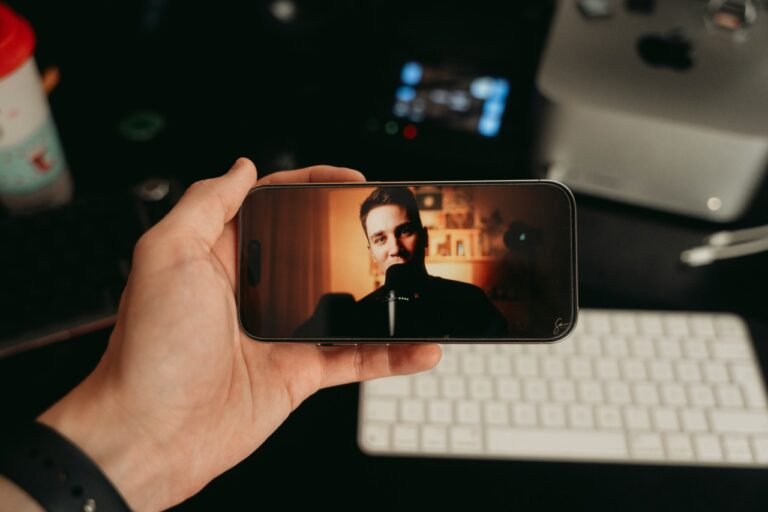
Is Working from Home Making People Lonelier?
Vocabulary
Isolation – The state of being separated from other people, either physically or emotionally.
Example – Working from home every day without seeing coworkers can lead to feelings of isolation.
Hybrid – A combination of two different things; in work, it means splitting time between home and the office.
Example – Many companies now offer a hybrid schedule where employees go to the office two or three days a week.
Mortality – The state of being subject to death; often used when discussing death rates in a population.
Example – Research shows that loneliness increases mortality risk as much as smoking 15 cigarettes a day.
Compensate – To make up for something that is missing or lost by providing something else.
Example – Remote workers tried to compensate for lost office friendships by joining online communities.
Surge – A sudden and large increase in something.
Example – There has been a surge in loneliness among young adults since the shift to remote work.
Article
Remote work has given millions of people something they always wanted: no commute, flexible hours, and the freedom to work in comfortable clothes. But researchers are now asking whether this freedom comes with a hidden cost. A growing body of evidence suggests that working from home is making people lonelier than they realize.
A major study published in the journal Science in June 2026 analyzed data from 588,322 American workers across five nationally representative surveys conducted between 2011 and 2024. The researchers found something striking. Workers in remote-capable jobs spent approximately one extra waking hour alone each day compared to those who worked in person. That might not sound like much, but over a week, it adds up to an entire working day spent without human contact. The study also found that this lost social time was not compensated for in the evenings. People did not socialize more after work to make up for the quiet days at home.
The numbers from around the world tell a similar story. In the United Kingdom, about one in six adults report feeling lonely “often or always,” according to the Imperial College INTERACT study of 135,725 English adults. More than one in five regularly felt a lack of companionship or felt cut off from others. In the United States, 71% of adults aged 18 to 25 reported feelings of isolation, according to the Cigna Loneliness Index.
Young workers appear to be the most affected. A 2026 survey by CoworkingCafe found that Gen Z remote workers experience high-frequency loneliness at double the rate of Millennials. About 20% of Gen Z workers reported feeling lonely one to two times a week or more, compared to roughly 10% of Millennials. Meanwhile, Gen X workers, who often entered the workforce long before remote work became common, reported the lowest levels of loneliness, with 69% experiencing it less than monthly or never.
Why is Gen Z struggling more? Experts point to timing. Many young professionals entered the workforce during or after the pandemic. They never had the chance to build the in-person relationships and office friendships that older colleagues take for granted. Starting a career through a screen, meeting coworkers only through video calls, and missing out on casual hallway conversations makes it harder to develop a sense of belonging.
The health consequences of this loneliness are serious. The World Health Organization reports that one in six people worldwide experience persistent loneliness, and this condition is linked to approximately 871,000 preventable deaths annually. Research has shown that lacking social connection carries a mortality risk equivalent to smoking 15 cigarettes a day. Beyond physical health, lonely workers are less productive and more likely to miss work. Loneliness-related absenteeism costs U.S. employers an estimated $154 billion each year.
However, the picture is not entirely negative. The CoworkingCafe survey found that seven in ten remote workers reported lower stress levels after switching to remote arrangements. Women experienced even stronger benefits, with more than 75% feeling less stressed. About 77% of respondents rated their overall mental health at 7 or higher on a 10-point scale.
This creates an interesting contradiction. Remote work reduces stress and gives people more control over their lives, but it also removes the daily social interactions that keep loneliness at bay. The solution, many researchers suggest, is not to force everyone back to the office. Instead, hybrid arrangements that combine one to two office days per week with remote flexibility seem to offer the best of both worlds. Studies show that these setups significantly reduce isolation while preserving the benefits of working from home.
For those who work fully remotely, experts recommend being intentional about social connection. Joining a coworking space, scheduling regular video calls with colleagues that are not about work, or simply working from a coffee shop a few times a week can help fill the social gap. The key is recognizing that human connection does not happen automatically when you work alone. It requires effort.
Remote work is not going away. The question is whether workers and companies can find ways to keep the flexibility without losing the human connection that makes work meaningful.
Discussion
Do you prefer working from home, working in an office, or a hybrid arrangement? What are the biggest advantages and disadvantages of each for you personally?
The article says remote workers lose about one hour of social contact per day. How important do you think casual workplace conversations are for building friendships?
Why do you think younger workers feel lonelier than older workers when working remotely? Is it only about experience, or are there other factors?
In your culture, how do people typically maintain social connections when they live or work alone? Are there any traditions or habits that help prevent loneliness?
Some people say they actually prefer being alone and that working from home is ideal for them. Do you think there is a difference between enjoying solitude and experiencing loneliness?
If you managed a remote team, what specific things would you do to help your employees feel connected and less isolated?
Sources
Science: Home Alone: Remote Work, Isolation, and Mental Health
CoworkingCafe: The 2026 Remote Work Well-Being Survey: The Gains, the Gaps and the Hidden Costs of Flexibility
Tech Times: Working Alone: Remote Jobs Took One Hour of Daily Social Contact and Did Not Give It Back
World Health Organization: WHO Commission on Social Connection