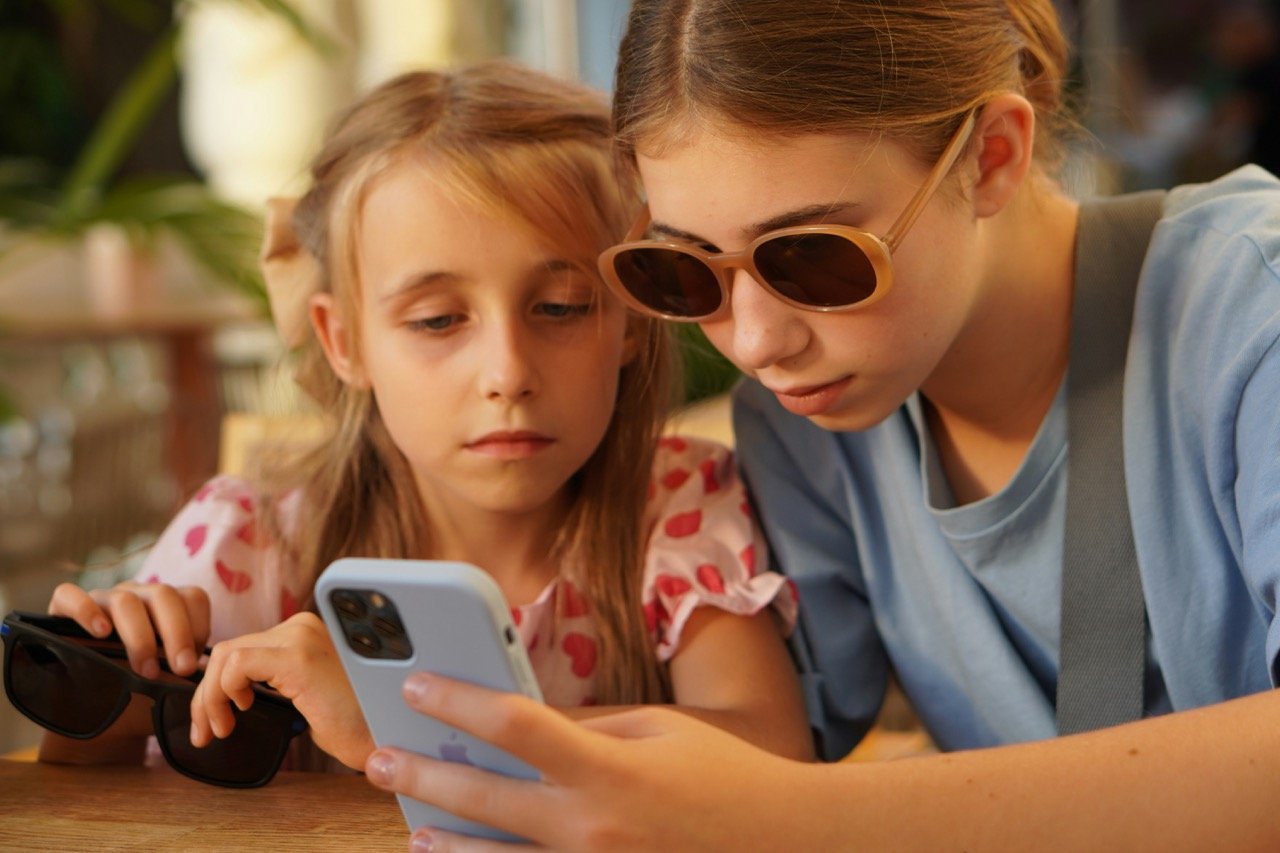
Should Teens Have a Phone-Free School Day? What the Evidence Says
Vocabulary
Ban – An official rule that says people cannot do or use something.
Example – Many countries now have a ban on phones in school.
Distraction – Something that stops you from giving your full attention to what you are doing.
Example – Some teachers say a buzzing phone is a big distraction in class.
Evidence – Facts or information that show whether something is true.
Example – Researchers are still collecting evidence about whether phone bans help students learn.
Well-being – How happy, healthy and comfortable a person feels.
Example – One study found that student well-being improved after a few years of a phone policy.
Enforce – To make sure that people follow a rule.
Example – Teachers must enforce the phone rule during lessons, breaks and lunch.
Article
In many schools around the world, the first thing a student does in the morning is hand over a phone. Some schools use a locked pouch. Others use a box at the classroom door. The idea is simple: for the school day, phones stay out of reach. But does it really work, and is it fair to teenagers who use their phones for almost everything?
The idea has spread quickly. According to UNESCO’s Global Education Monitoring Report, 114 education systems had national bans on phones in schools by March 2026. That is 58 percent of countries. In June 2023 the figure was 24 percent, and by early 2025 it was 40 percent. UNESCO says that countries such as Bolivia, Costa Rica, Croatia, Georgia, the Maldives and Malta introduced new bans after late 2025. Some other countries, including Colombia and Estonia, chose a different path. They ask each school to write its own policy instead of using one national rule.
England is a clear example of a country that made its rules stronger. According to the House of Commons Library, a section of the Children’s Wellbeing and Schools Act 2026 gives legal force to government guidance on phones. That section took effect on 29 June 2026, and full use of the guidance is expected from 1 September 2026. The guidance says that all schools should be mobile phone-free environments by default. This covers lessons, the time between lessons, breaks and lunch. Schools can still make exceptions for individual pupils, and Ofsted, the school inspection body, will look at how schools handle phones. The government has said it will review the guidance by September 2027.
Supporters of bans give three main reasons. First, phones can pull attention away from the lesson. Second, they can be used for cyberbullying. Third, social media can harm young people. UNESCO’s report points out, for example, that girls are twice as likely as boys to suffer from eating disorders that social media makes worse. Supporters also hope that students will talk to each other more at lunch and between classes.
However, the newest research shows a more mixed picture. According to a report in Fortune, researchers from Stanford University, Duke University, the University of Michigan and the University of Pennsylvania studied data from 4,600 schools. They found that test scores did not change in a meaningful way. Duke professor E. Jason Baron said the effects were “basically close to zero.” The study also found no measurable change in bullying, attendance or how much attention students said they paid in class. On the positive side, student well-being improved by the third year of a ban, teachers were more satisfied, and there was more face-to-face interaction. The report also says that an older UK study from 2013 found a 6.4 percent rise in test scores after bans, with the biggest gains among students who struggled most. Different studies, in different places and times, have given different answers.
Students themselves seem to be slowly adjusting. A survey led by the University of Southern California’s Center for Applied Research and Education, reported by Education Week, followed teenagers across a school year. The share who said they used phones in class rose from 28 percent to 42 percent. The rise was smaller where schools had strict “bell-to-bell” bans, from 25 percent to 35 percent, than where rules were looser, from 32 percent to 50 percent. This suggests that a strict rule is easier to follow than a weak one. The survey also found that about 30 percent of teens said the school rules made them use their phones more outside school, while 60 percent saw no change and 10 percent said they used them less.
There are also arguments against a full ban. UNESCO notes that limiting phones may reduce distraction, but schools still need to teach students how to judge online information, manage screen time and understand online risks. Some critics worry that students who never use phones at school will have fewer chances to practice these skills with a teacher nearby. Others say that a ban takes a lot of staff time to enforce, and that this time and money could go to other things. Students often say they feel they are not trusted, and some parents want to reach their children during the day.
It is important to separate facts from opinions here. It is a fact that many countries have introduced bans and that large studies have found little change in test scores. It is an opinion that phones are the main reason students lose focus, or that a ban is unfair. Predictions are even less certain. Some researchers say the benefits may take longer than a few years to appear. Others think students will find new ways to get around the rules. The England review in 2027 should provide more information.
For now, many schools are asking a more practical question. If a ban is not a quick way to raise grades, is it still worth having for other reasons, such as calmer lunchtimes and happier teachers? Or should schools spend their energy on teaching healthy phone habits instead? Thoughtful people disagree, and both groups say they want the same thing: students who can learn well and live well with technology.
Discussion
What do you think a school day feels like without a phone?
Why do you think some countries choose a national ban while others let each school decide?
How could a school help students who need their phones for health or family reasons?
What surprised you most about the research results on test scores and well-being?
What are the best ways for schools to teach students to use phones responsibly?
How would a phone-free day change the way you talk to your classmates or friends?
What rules about phones would you write for a school, and why?
Sources
UNESCO Global Education Monitoring Report: Phone bans in schools are spreading worldwide as the policy debate rages on
House of Commons Library: Mobile phones in schools (England)
Fortune: Schools are spending tens of millions banning phones from classrooms, but test scores haven’t budged
Education Week: Are Teens Starting to Accept Cellphone Bans? A New Survey Has Answers