35 Best English Tongue Twisters for Pronunciation Practice
Learning English pronunciation does not have to be boring. One of the most fun and effective ways to improve your speaking skills is by practicing English tongue twisters.
Tongue twisters are short sentences or phrases that are difficult to say because they repeat similar sounds. They challenge your mouth, tongue, and lips to move in unfamiliar ways. While they are often seen as games for children, tongue twisters are also used by actors, politicians, singers, and public speakers who want to speak more clearly and confidently.
For English learners of all ages, tongue twisters can be a powerful pronunciation tool. They help strengthen the muscles used for speech, improve muscle memory, increase awareness of difficult sounds, and develop clearer articulation and fluency.
Why Are Tongue Twisters Good for English Pronunciation?
Many English learners struggle with sounds that do not exist in their first language. Tongue twisters allow you to focus on these challenging sounds in a fun and repetitive way.
Regular practice can help you:
- Improve your English pronunciation and accent
- Strengthen your mouth and tongue muscles
- Develop better speaking rhythm and fluency
- Identify difficult sounds and pronunciation mistakes
- Warm up before English speaking activities or presentations
- Build confidence when speaking English
The key is not to start as fast as possible. Begin slowly and pay attention to how your mouth moves. Many pronunciation experts recommend practicing in front of a mirror so you can watch the position of your lips and tongue.
Once you can say a tongue twister correctly, gradually increase your speed. The goal is to speak clearly, not just quickly.
The 35 Best English Tongue Twisters
Easy Tongue Twisters
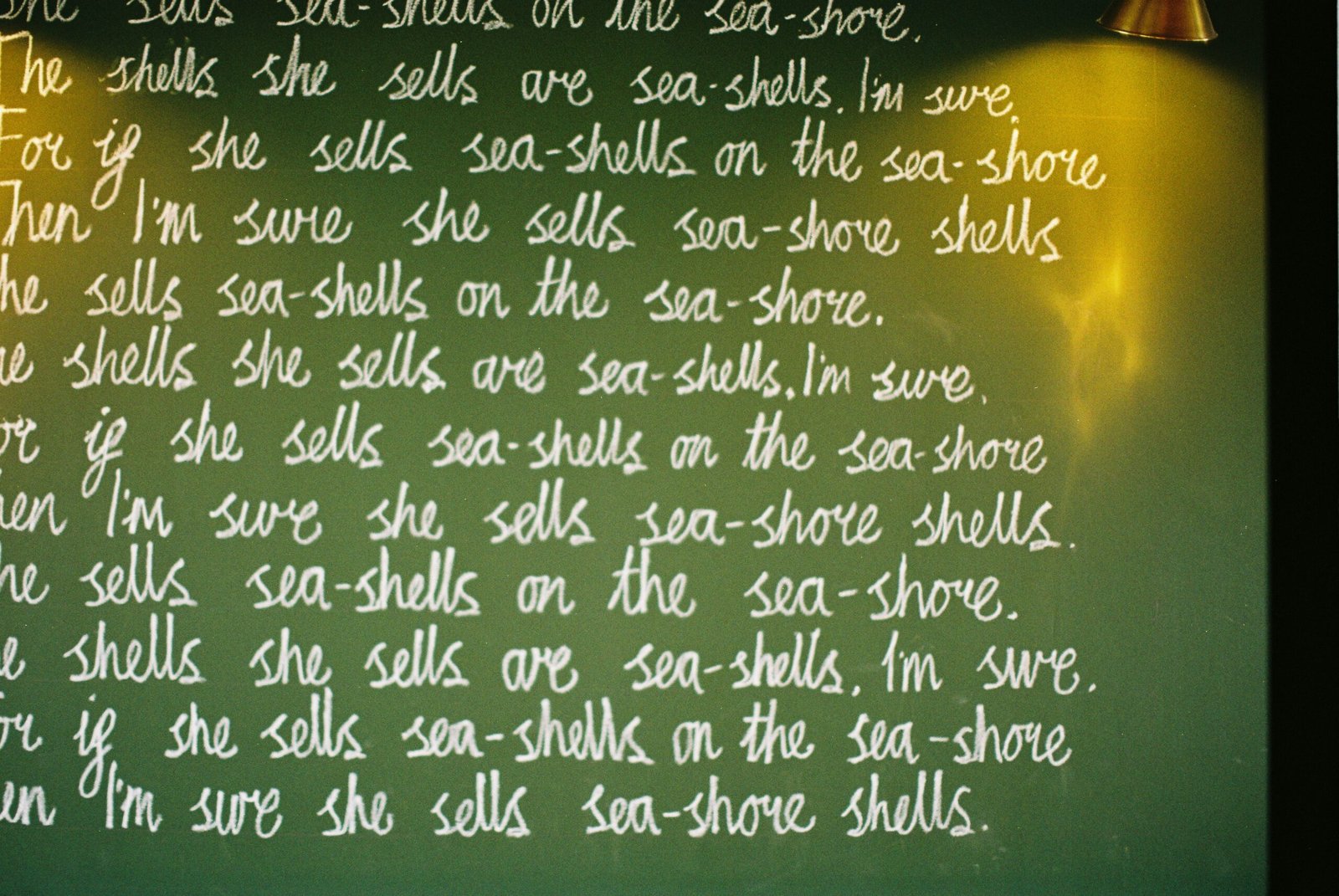
1. She sells seashells by the seashore.
2. Red lorry, yellow lorry.
3. Thin sticks, thick bricks.
4. Rolling red wagons.
5. Which wristwatches are Swiss wristwatches?
6. Four fine fresh fish for you.
7. Eleven benevolent elephants.
8. She sees cheese.
9. Flash message.
10. Snap, crackle, pop.
Medium Difficulty Tongue Twisters
11. I scream, you scream, we all scream for ice cream.
12. I saw a kitten eating chicken in the kitchen.
13. A big black bear sat on a big black rug.
14. If a dog chews shoes, whose shoes does he choose?
15. Willie’s really weary.
16. Eddie edited it.
17. Nine nice night nurses nursing nicely.
18. Tom threw Tim three thumbtacks.
19. He threw three free throws.
20. Wayne went to Wales to watch walruses.
Difficult Tongue Twisters
21. Peter Piper picked a peck of pickled peppers. A peck of pickled peppers Peter Piper picked. If Peter Piper picked a peck of pickled peppers, where’s the peck of pickled peppers Peter Piper picked?
22. Betty Botter bought some butter, but she said the butter’s bitter. If I put it in my batter, it will make my batter bitter. But a bit of better butter will make my batter better.
23. How much wood would a woodchuck chuck if a woodchuck could chuck wood? He would chuck as much wood as a woodchuck could chuck if a woodchuck could chuck wood.
24. Fuzzy Wuzzy was a bear. Fuzzy Wuzzy had no hair. Fuzzy Wuzzy wasn’t fuzzy, was he?
25. I wish to wash my Irish wristwatch.
26. I thought I thought of thinking of thanking you.
27. A skunk sat on a stump and thunk the stump stunk, but the stump thunk the skunk stunk.
28. I slit the sheet, the sheet I slit, and on the slitted sheet I sit.
29. Lesser leather never weathered wetter weather better.
30. You know New York, you need New York, you know you need unique New York.
Expert Level Tongue Twisters
31. Can you can a can as a canner can can a can?
32. Good blood, bad blood.
33. Truly rural.
34. Two tried and true tridents.
35. All I want is a proper cup of coffee made in a proper copper coffee pot.
Tips to Practice Tongue Twisters More Effectively
Want to improve your English pronunciation faster? Follow these simple steps:
Start slowly – Do not worry about speed at the beginning. Focus on saying every sound correctly.
Break long tongue twisters into smaller parts – Practice one phrase at a time before saying the entire sentence.
Use a mirror – Watch how your mouth and tongue move when producing difficult sounds.
Record yourself – Listening to your own pronunciation can help you notice mistakes.
Practice regularly – Just five minutes a day can improve your clarity and confidence over time.
Most importantly, have fun! Tongue twisters are one of the easiest ways for children, teenagers, and adults to practice English speaking. Whether you are preparing for an English exam, improving your accent, or simply trying to become a more confident speaker, these classic tongue twisters are a great place to start.
Tongue Twister FAQs
How many tongue twisters should you practice a day?
Just five minutes a day is enough to see real improvement. Pick two or three tongue twisters and repeat them slowly before speeding up, consistency matters more than quantity.
Are tongue twisters good for kids learning English?
Yes, tongue twisters work well for learners of all ages, including children. They turn pronunciation practice into a game, which makes it easier for kids to stay engaged while building the same muscle memory and sound awareness that adult learners benefit from.
Why are tongue twisters so hard to say?
Tongue twisters repeat similar sounds in quick succession, which forces your mouth and tongue to switch between positions faster than they naturally would in normal speech. This is especially challenging for sounds that don’t exist in your first language.
Can tongue twisters actually improve my English accent?
They can help. Regular practice strengthens the muscles used for speech and increases your awareness of specific sounds you may be mispronouncing, which supports clearer, more confident pronunciation over time. They work best alongside other pronunciation practice, not as a replacement for it.
Sources
- engVid: 50 Tongue Twisters to Improve Your Pronunciation by Alex
- Oxford House Barcelona: English Tongue Twisters to Improve Your Pronunciation