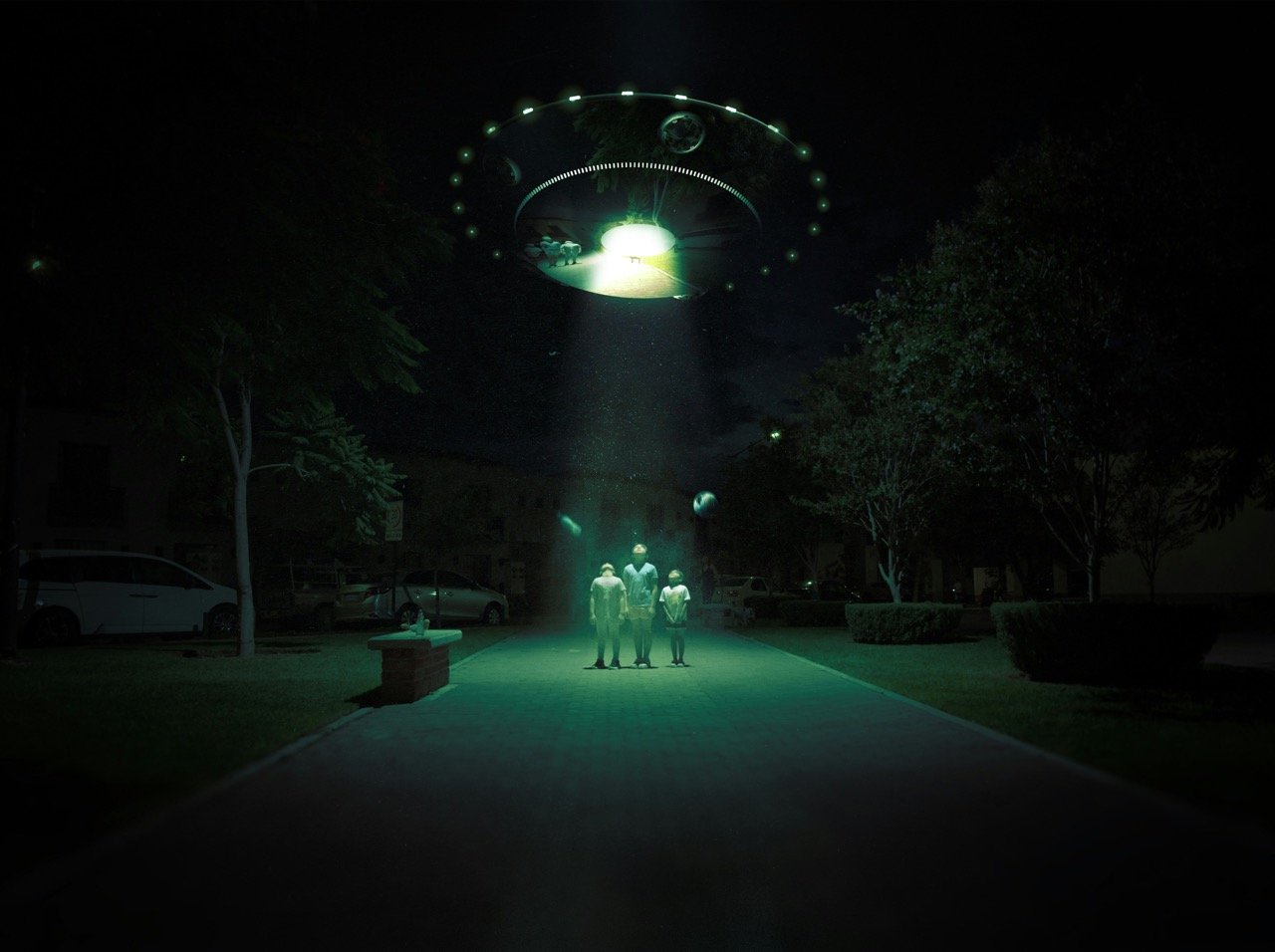
Should We Take UFO Sightings More Seriously in 2026?
Vocabulary
Anomalous – different from what is normal or expected, in a way that is hard to explain.
Example – Radar operators reported an anomalous object moving faster than any known aircraft.
Declassify – to officially make secret government information available to the public.
Example – The agency agreed to declassify hundreds of files related to unexplained sightings.
Skepticism – doubt about whether something is true or reliable.
Example – Many scientists approach UFO reports with skepticism until there is solid evidence.
Transparency – the quality of being open and honest, especially about information that was previously hidden.
Example – Lawmakers have pushed for more transparency about what the military actually knows.
Corroborate – to provide evidence that supports or confirms a claim.
Example – A single blurry photo is not enough to corroborate a dramatic claim.
Article
For decades, UFO sightings were treated mostly as a punchline, something for late-night radio shows and conspiracy forums rather than serious government business. That has changed considerably in 2026. Over the past year, the United States government has released more official files, formed new scientific panels, and investigated more reported incidents involving what officials now call unidentified anomalous phenomena, or UAP, than at almost any point in modern history.
A New Era of Official Transparency
In February 2026, the administration directed several federal agencies to begin identifying and releasing government files related to UAP and unexplained aerial phenomena. That order led to the creation of a task force in May, tasked with reviewing and gradually releasing UAP-related records held across the intelligence community. Since then, several batches of previously unseen videos and documents have been made public.
In July, the Office of the Director of National Intelligence issued formal guidance encouraging further disclosure of UAP-related information. Around the same time, lawmakers working on the annual defense budget bill included language requiring the Pentagon to brief Congress on UAP-related military operations dating back to 2004, a level of historical scrutiny that would have been almost unthinkable a decade ago.
The Virginia Coast Incident
Perhaps the most attention-grabbing recent case involves a Navy report from off the coast of Virginia. According to defense reporting, the Pentagon’s office responsible for investigating these reports, known as AARO, is currently examining an incident involving roughly one hundred unidentified airborne objects and watercraft recorded operating in the area. Officials have been careful not to jump to conclusions, but the sheer scale of the reported activity has drawn significant attention from researchers and journalists alike.
AARO has historically handled hundreds of similar reports each year, the vast majority of which turn out to have mundane explanations, ranging from weather balloons and drones to optical illusions and misidentified aircraft. Even so, a small percentage of cases remain officially unresolved, which is precisely the category fueling renewed public curiosity.
Why Scientists Urge Caution
Not everyone is convinced that more files automatically mean more answers. A newly formed UAP Science Advisory Council, led by Harvard physicist Avi Loeb, has emphasized applying rigorous scientific methods rather than assuming extraordinary explanations. Loeb and others argue that unexplained does not mean unexplainable, and that most anomalous reports will likely be corroborated by conventional science once enough data is gathered.
Skeptics also point out that government transparency about investigating a topic is not the same as evidence supporting extraterrestrial visitation. Releasing a file, they argue, only confirms that an incident was reported and reviewed, not that it involved anything beyond human explanation. Previous Pentagon assessments have stated there was no verifiable evidence of extraterrestrial technology, even after examining hundreds of cases.
Believers, Skeptics, and Everyone In Between
Public opinion sits somewhere between total belief and total dismissal. Polling in recent years has found that roughly a third of Americans believe at least some UAP sightings involve alien spacecraft, a share that has been climbing gradually. That still leaves a majority who remain uncertain or unconvinced, but the topic has clearly moved from fringe curiosity toward something closer to mainstream discussion, complete with congressional hearings, dedicated government offices, and academic research councils.
Whether this new era of openness eventually produces a definitive answer or simply a larger, better-documented pile of unresolved mysteries remains to be seen. What does seem clear is that governments once reluctant to even use the word “UFO” are now actively investing time, money, and scientific expertise into understanding what, exactly, people keep seeing in the sky.
Discussion
Do you think governments have been honest about what they know regarding UFOs and UAP?
Why do you think interest in this topic has grown so much in recent years?
Would seeing declassified government files change your opinion about UFOs?
Do you think most unexplained sightings have ordinary explanations, or something more unusual?
How would you react if scientists eventually confirmed evidence of something truly unexplainable?
Is government transparency about a topic like this important, even if the answers turn out to be disappointing?
Do you know of any famous UFO or UAP stories from your own country?
Sources
DefenseScoop: Pentagon Investigating Mysterious UAP Event Reported by the Navy Near Virginia’s Coast
DefenseScoop: New Science Advisory Council Forms to Help US Government Resolve the UAP Mystery
DLA Piper: Office of the Director of National Intelligence Issues Preliminary Guidance on Disclosure of Unidentified Anomalous Phenomena