Should Beginners Invest in the Stock Market, or Is It Too Risky?
Vocabulary
Volatility – how quickly and unpredictably the price of something, like a stock, moves up and down.
Example – Because of the market’s volatility this year, the value of her shares changed a lot from week to week.
Diversify – to spread money across many different investments instead of putting it all in one place.
Example – Financial advisors often suggest that new investors diversify instead of buying only one company’s stock.
Index fund – an investment that automatically holds a large mix of companies, so investors don’t have to choose stocks one by one.
Example – Many financial educators recommend index funds to beginners because they spread out risk automatically.
Long-term – lasting for many years, not just a few weeks or months.
Example – Experts say investing works best as a long-term plan, not a way to make quick money.
Risk tolerance – how much loss or uncertainty a person feels comfortable accepting.
Example – Someone with low risk tolerance might feel anxious watching their stocks drop in value.
Article
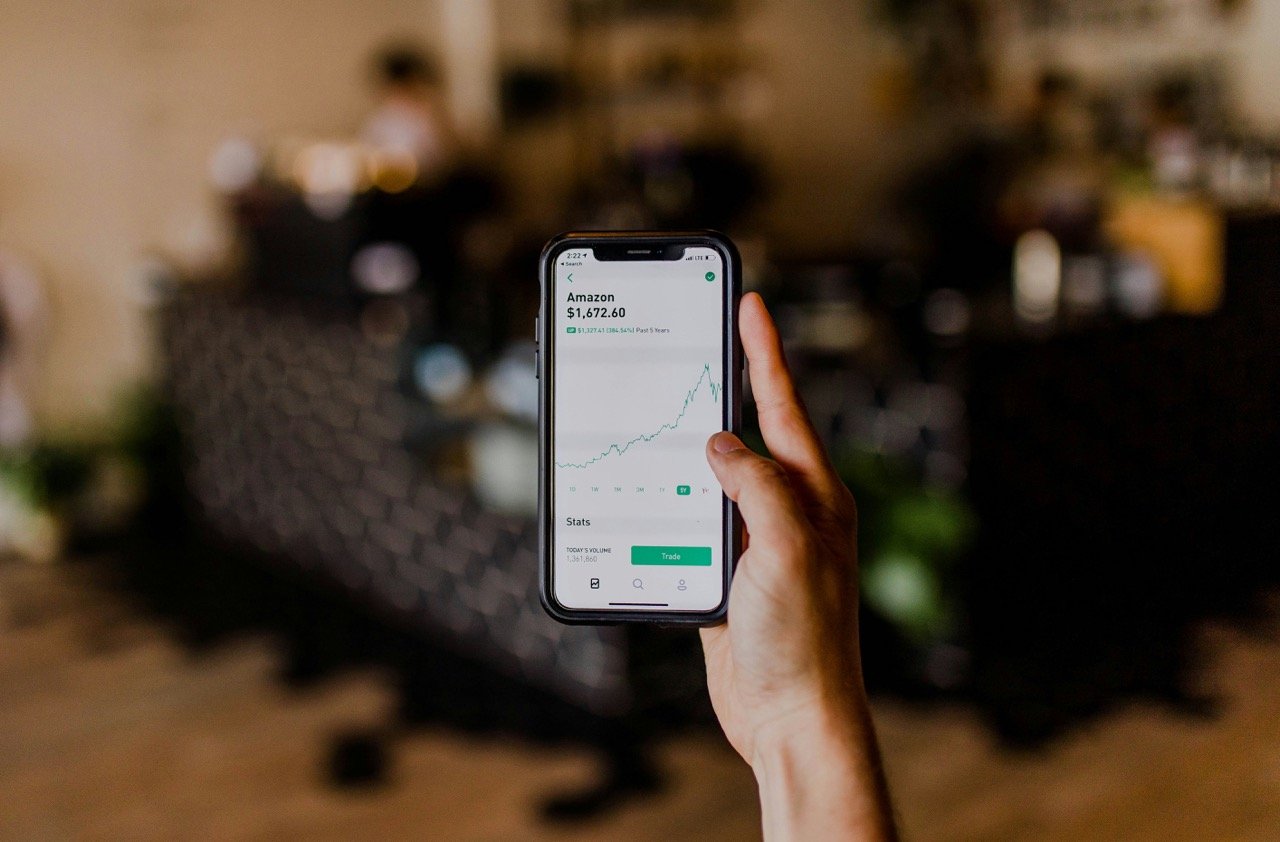
More people than ever are opening a brokerage account and buying their first shares of stock. A growing share of Gen Z investors in the United States say they started putting money into the stock market before the age of 25, according to industry data reported by NBC San Diego. Apps have a lot to do with this shift. Fractional-share investing, simple buy-and-sell functions built for a phone screen, and platforms designed specifically for first-time investors have made it possible to start with just a few dollars instead of needing a large sum of money to open an account, according to NerdWallet’s 2026 review of beginner investing apps.
The appeal is easy to understand. For decades, investing in individual companies looked complicated and expensive, something reserved for people who already had money or worked in finance. Today, a student or a new graduate can download an app, deposit a small amount, and own a small piece of a well-known company within minutes. Younger investors also appear more comfortable treating investing as an ongoing habit rather than a single big decision, checking their portfolios the way earlier generations might have checked a savings account balance.
Easier access, however, does not mean lower risk. Financial analysts generally agree that markets in 2026 have been unpredictable, shaped by factors such as interest rate decisions, trade policy, and global political tension. Morningstar’s market strategists have pointed to volatility driven by uncertainty over Federal Reserve leadership and unexpected inflation data. CNBC has reported that many investors are responding by spreading their money across different types of assets rather than concentrating it in a small number of stocks, a strategy generally known as diversification.
This is the part of investing that can feel uncomfortable for beginners. Stock prices can rise sharply one week and fall just as fast the next, and a single piece of news can change a company’s value overnight. Advisors at firms such as Morgan Stanley describe this kind of up-and-down movement as a normal, expected feature of markets rather than something to fear outright, though they stress that investors still need a plan for handling it calmly. Suggested strategies include keeping some cash in reserve, avoiding decisions driven purely by short-term panic, and using a method called dollar-cost averaging, which simply means investing a fixed amount on a regular schedule instead of trying to guess the single best moment to buy.
So how should someone with no experience actually begin? Financial educators tend to agree on one central idea: most beginners are better off starting with index funds rather than picking individual companies. An index fund is a single investment that automatically holds many different companies at once, spreading out risk without requiring the investor to research each business individually. Supporters of this approach point out that consistently choosing individual stocks that outperform the broader market is difficult even for professional fund managers, and that many people who believe they can do it consistently are simply overestimating their own skill.
That does not mean picking individual stocks is off-limits for a beginner. Some educators suggest a hybrid approach: placing the large majority of savings into low-cost, diversified index funds for steady growth, while setting aside a smaller portion, often described as somewhere around ten to twenty percent, for individual stocks in companies an investor wants to follow closely. This way, a new investor can still learn how individual companies behave without risking their entire investment on a small number of bets.
Ultimately, most financial educators frame investing as a long-term activity rather than a quick way to build wealth. Markets tend to rise over long stretches of time, even though they regularly fall over shorter ones, and reacting emotionally to short-term drops is one of the most common mistakes new investors make. Whether a person chooses to start today or waits until they feel more prepared, most experts recommend treating any first investment as money that will not be needed for several years, so that ordinary market ups and downs have time to smooth out.
None of this means investing is right, or wrong, for every beginner. It depends heavily on a person’s financial situation, their goals, and how much uncertainty they can tolerate without losing sleep. What financial educators broadly agree on, however, is that going in with realistic expectations, a long time horizon, and a diversified starting point gives a true beginner a far steadier footing than trying to pick the next big winner on day one.
Discussion
What do you think is the biggest reason why more young people are starting to invest today?
How would you feel emotionally if the value of your investments dropped by 20 percent in one month?
What are the advantages and disadvantages of investing in a single company compared to an index fund?
Why do you think some financial educators warn beginners against trying to pick individual winning stocks?
What personal financial goals might change how much risk someone is willing to take?
How has technology changed the way ordinary people manage their money compared to twenty years ago?
Sources
NerdWallet: 5 Best Investing Apps for Beginners in 2026
Morningstar: Has the Stock Market Really Been More Volatile Than Usual This Year?
CNBC: Stock market volatility: How investors are diversifying
Morgan Stanley: Market Volatility: How Investors Can Handle It
NBC San Diego: Trend shows Gen Z and younger millennials are investing earlier in stock market